Bridging the Digital Divide of Being: Phenomenological Approaches to Social-Emotional Learning in Virtual Spaces

Bridging the Digital Divide of Being: Phenomenological Approaches to Social-Emotional Learning in Virtual Spaces

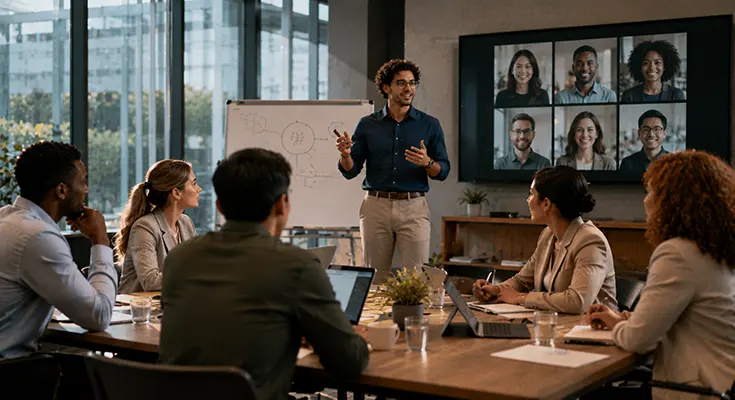
The shift to virtual learning has often been framed as a technical challenge—a matter of bandwidth, hardware, and software compatibility. However, for the student sitting behind the screen, the challenge is profoundly ontological. It is a question of “being-in-the-world” when that world is composed of pixels and latency. As we strive to integrate Social-Emotional Learning (SEL) into digital classrooms, we must move beyond the “technical fix” and adopt a phenomenological approach: one that investigates the lived experience of the student as a conscious, embodied subject navigating a disembodied space.

The Crisis of Presence: A Phenomenological Framework

Phenomenology, the philosophical study of structures of experience and consciousness, offers a vital lens for 21st-century education. At its core, it asks: What is it like for this student to be here? In a virtual classroom, we encounter what philosophers call a “Crisis of Presence.” While a student is physically present in …

Bridging the Digital Divide of Being: Phenomenological Approaches to Social-Emotional Learning in Virtual Spaces Read More
Code, Craft, and Credibility: The Best Non-Degree Pathways for Gen Z Tech Careers in 2026

Code, Craft, and Credibility: The Best Non-Degree Pathways for Gen Z Tech Careers in 2026

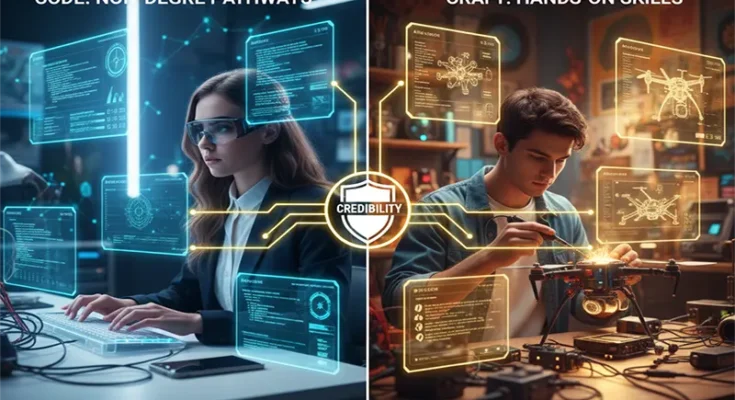
The social contract that once promised a guaranteed middle-class life in exchange for a four-year degree has officially expired. For Gen Z, the math no longer adds up: the average cost of a private university degree now hovers near $200,000, while the half-life of technical skills has shrunk to less than five years. We are witnessing the burst of the “Degree Inflation” bubble.

In its place, a “Skill-First” economy has emerged. In 2026, tech giants like Google, IBM, and Apple have largely stripped degree requirements from their entry-level job descriptions. The industry has realized that the ability to solve a complex problem in Python or secure a cloud network is not tethered to a diploma. For the modern Gen Z seeker, the path to a six-figure tech career is no longer a four-year marathon—it’s a series of strategic, high-intensity sprints.

The “Big Three” Pathways to Tech

Entering tech without a …

Code, Craft, and Credibility: The Best Non-Degree Pathways for Gen Z Tech Careers in 2026 Read More
The Neo-Deweyan Shift: Reconstructing Progressive Education for the 21st-Century Gig Economy

The Neo-Deweyan Shift: Reconstructing Progressive Education for the 21st-Century Gig Economy

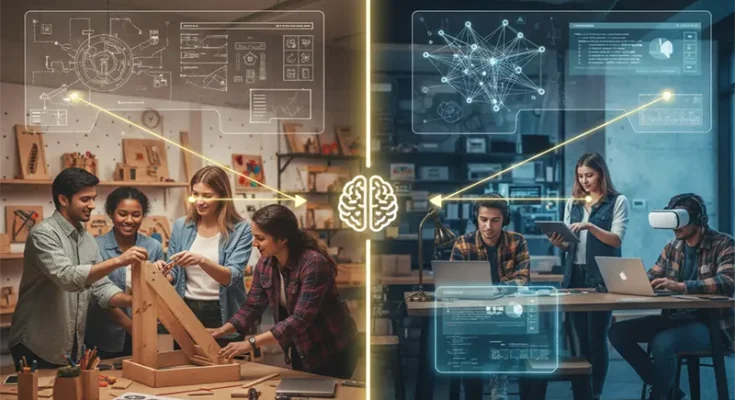
In 1896, John Dewey established the University of Chicago Laboratory School, a radical experiment premised on the belief that education should be a “miniature community” rather than a factory for rote memorization. Dewey’s vision of Progressive Education—learning by doing, social integration, and democratic participation—was a response to the rigidities of the Industrial Age. Today, in 2026, we face a similarly profound disruption. The “traditional” career path is being replaced by the gig economy, a landscape defined by project-based work, digital platforms, and the “precariat” workforce.

To thrive in this new era, we must reconstruct progressive education. We no longer need schools that produce compliant employees; we need “Learning Labs” that cultivate entrepreneurial agency and agile craftsmanship.

The “Gig” Skill Set vs. The “Factory” Curriculum

The industrial model of education was designed for stability: students learned a fixed set of facts to prepare for a lifelong job in a …

The Neo-Deweyan Shift: Reconstructing Progressive Education for the 21st-Century Gig Economy Read More
Beyond the Firewall: A Guide to HIPAA-Compliant Online Tutoring Platforms for Special Education

Beyond the Firewall: A Guide to HIPAA-Compliant Online Tutoring Platforms for Special Education

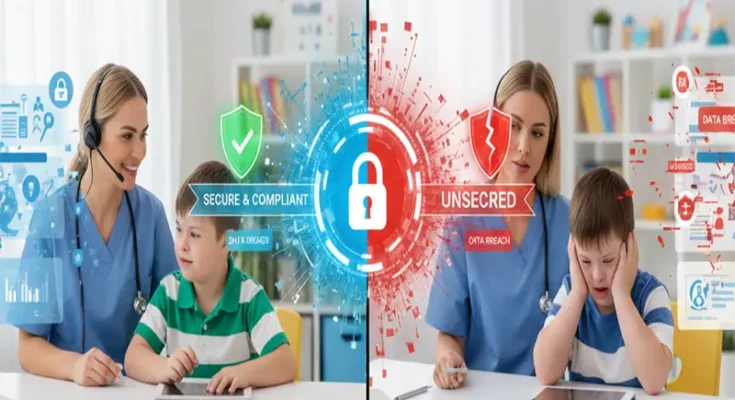
In the rapidly evolving landscape of remote learning, special education has emerged as a field requiring a unique blend of pedagogical innovation and stringent legal oversight. While general K-12 tutoring is primarily governed by the Family Educational Rights and Privacy Act (FERPA), the shift toward providing related services—such as speech-language pathology (SLP), occupational therapy (OT), and behavioral counseling—via the internet has brought a new regulatory giant into the classroom: the Health Insurance Portability and Accountability Act (HIPAA).

Navigating this “Compliance Crossroads” is not merely a bureaucratic hurdle; it is a foundational requirement for protecting the most sensitive data of our most vulnerable students. For providers in 2026, understanding the intersection of technology and healthcare law is essential to building a sustainable and ethical remote practice.

The Compliance Crossroads: FERPA vs. HIPAA

A common point of confusion for educators is determining which law applies. Generally, if a school employee provides a …

Beyond the Firewall: A Guide to HIPAA-Compliant Online Tutoring Platforms for Special Education Read More
Tactile Foundations in a Digital World: A Comparison of Montessori vs. Waldorf Philosophies for Remote Learning

Tactile Foundations in a Digital World: A Comparison of Montessori vs. Waldorf Philosophies for Remote Learning

The transition to remote learning has been a challenge for all of education, but perhaps for none more so than the alternative models of Montessori and Waldorf. Both philosophies are deeply rooted in the physical world, emphasizing that “the hand is the tool of the brain.” They rely on specific textures, smells, and interpersonal energies that are difficult to transmit through a liquid crystal display. Yet, the 2020s have forced a “Hybrid Holistic” revolution, compelling these centuries-old traditions to find their soul within the digital architecture of the modern home.

Philosophical Pillars: Independence vs. Imagination

To understand how these methods adapt to remote learning, one must first understand their divergent goals.

Montessori is a “scientific pedagogy.” Developed by Dr. Maria Montessori, it focuses on the child’s innate drive toward independence. The curriculum is built around the “Prepared Environment”—a space where every object has a purpose and a place, allowing the …

Tactile Foundations in a Digital World: A Comparison of Montessori vs. Waldorf Philosophies for Remote Learning Read More