
AI-Powered Personalized Learning Paths for K-12 Students: From Data Points to Human Potential

AI-Powered Personalized Learning Paths for K-12 Students: From Data Points to Human Potential

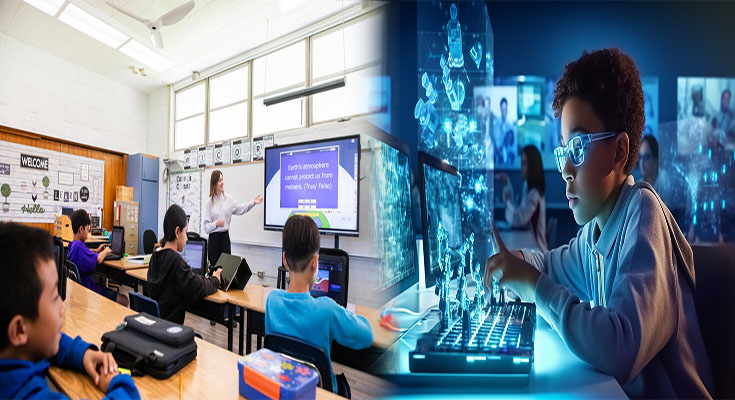
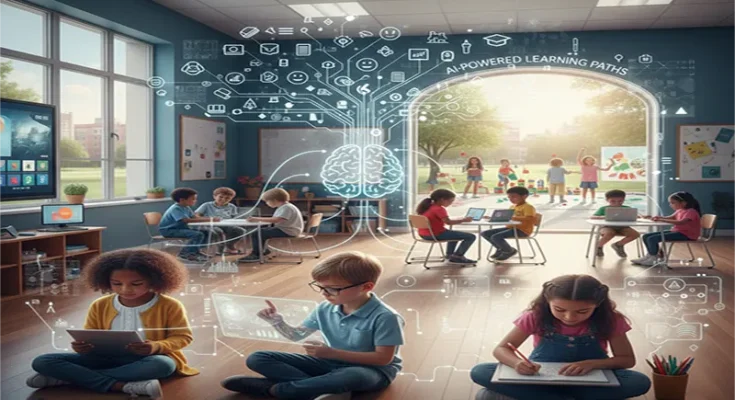
For decades, the “factory model” of education has been the standard: 30 students in a room, one textbook, one pace, and one primary instructor. While this model scaled education for the masses, it inherently left two groups behind—those who struggled to keep up and those who were ready to fly ahead. Today, we are witnessing a fundamental shift. AI-powered personalized learning paths are dismantling the one-size-fits-all approach, turning the classroom into a dynamic ecosystem where the curriculum adapts to the child, rather than the child conforming to the curriculum.

The Mechanics of Personalization: Under the Hood

To understand how AI transforms a student’s journey, we must look past the interface and into the “Triad Model” of intelligent tutoring systems. This architecture is what allows a platform to “know” a student better than a standard quiz ever could.

  • The Student Model: This is the digital DNA of the learner. It goes
AI-Powered Personalized Learning Paths for K-12 Students: From Data Points to Human Potential Read More
How Trade-Relevant Math and Writing Keep Learners Engaged - Sonoran Desert Institute

How Trade-Relevant Math and Writing Keep Learners Engaged – Sonoran Desert Institute

For many students, the idea of math or writing brings back memories of abstract equations and essays that felt disconnected from real life. In technical education, that disconnect can lead to frustration or disengagement. Yet when these subjects are tied directly to trade skills, they become powerful tools for building competence. Institutions like Sonoran Desert Institute (SDI), accredited by the Distance Education Accrediting Commission (DEAC), show that math and writing, when rooted in technical application, keep learners motivated and help them succeed in both training and the workplace.

In modern technical programs, numbers and words are not taught in isolation. They are woven into the practice of assembling, repairing, troubleshooting and documenting. This approach ensures that math and writing are not hurdles but supports, giving students the ability to measure precisely, record progress and communicate professionally.

Myth 1 – Technical Students Don’t Need Math

A common misconception is that trade …

How Trade-Relevant Math and Writing Keep Learners Engaged – Sonoran Desert Institute Read More
Leveraging Artificial Intelligence for Student Assessment: Unlocking Benefits for Educational Success

Leveraging Artificial Intelligence for Student Assessment: Unlocking Benefits for Educational Success

Artificial Intelligence (AI) has emerged as a transformative force in education, offering innovative solutions for student assessment and learning outcomes. Leveraging AI for student assessment presents a myriad of benefits, including “personalized feedback,” “efficiency,” “insights,” and “fairness,” which underscore the potential for AI to revolutionize the assessment landscape and enhance educational success.

1. Personalized Feedback

One of the key benefits of using AI for student assessment is the ability to provide personalized feedback tailored to individual learning needs. Keywords such as “adaptive assessment,” “individualized learning paths,” and “feedback optimization” highlight how AI-driven assessment tools can analyze student responses, identify areas of strength and weakness, and offer customized feedback. By providing personalized insights and recommendations, AI empowers educators to address students’ specific learning needs, promote self-directed learning, and facilitate continuous improvement.

2. Efficiency and Automation

The use of AI in student assessment offers significant improvements in efficiency and automation, marked by …

Leveraging Artificial Intelligence for Student Assessment: Unlocking Benefits for Educational Success Read More
Navigating the Future Education Landscape: Addressing Challenges and Embracing Opportunities

Navigating the Future Education Landscape: Addressing Challenges and Embracing Opportunities

The future of education is rapidly evolving, driven by technological advancements, global trends, and shifting societal needs. As the educational landscape continues to transform, educators and stakeholders must navigate a complex terrain marked by challenges and opportunities. Keywords such as “digital transformation,” “equity,” “21st-century skills,” and “innovation” underscore the key factors shaping the future of education.

1. Digital Transformation

The integration of technology in education presents both challenges and opportunities in the future landscape. Keywords like “digital literacy,” “online learning,” and “virtual classrooms” highlight the need to adapt to digital tools and platforms to enhance teaching and learning experiences. Embracing digital transformation can create opportunities for personalized learning, collaboration, and access to a wealth of educational resources. However, challenges such as the digital divide, cybersecurity risks, and the need for professional development underscore the importance of addressing digital equity and preparedness in the future education landscape.

2. Equity and Inclusion

Navigating the Future Education Landscape: Addressing Challenges and Embracing Opportunities Read More
The Rise of AI: Transforming Classroom Management and Teaching Methods

The Rise of AI: Transforming Classroom Management and Teaching Methods

Artificial Intelligence (AI) has rapidly permeated various aspects of our lives, and the realm of education is no exception. As educators seek innovative ways to enhance classroom management and teaching methods, AI is emerging as a game-changer, revolutionizing traditional practices and paving the way for more personalized and effective learning experiences.

AI-powered Classroom Management

AI is transforming classroom management by providing educators with tools to streamline administrative tasks, optimize instructional practices, and create tailored learning environments. Keywords such as “AI-powered attendance tracking,” “behavior analysis,” and “automated grading” are indicative of the technological advancements that are reshaping the classroom landscape.

AI-enabled attendance tracking systems can automatically monitor students’ presence, freeing up valuable instructional time and minimizing administrative burdens. Behavior analysis tools leverage AI algorithms to identify patterns in student behavior, allowing educators to gain insights into individual learning needs and provide targeted support. Furthermore, automated grading systems equipped with AI capabilities …

The Rise of AI: Transforming Classroom Management and Teaching Methods Read More