Code, Craft, and Credibility: The Best Non-Degree Pathways for Gen Z Tech Careers in 2026

Code, Craft, and Credibility: The Best Non-Degree Pathways for Gen Z Tech Careers in 2026

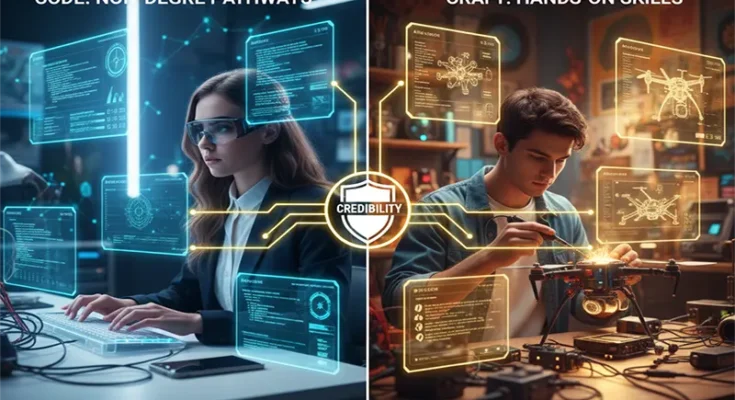
The social contract that once promised a guaranteed middle-class life in exchange for a four-year degree has officially expired. For Gen Z, the math no longer adds up: the average cost of a private university degree now hovers near $200,000, while the half-life of technical skills has shrunk to less than five years. We are witnessing the burst of the “Degree Inflation” bubble.

In its place, a “Skill-First” economy has emerged. In 2026, tech giants like Google, IBM, and Apple have largely stripped degree requirements from their entry-level job descriptions. The industry has realized that the ability to solve a complex problem in Python or secure a cloud network is not tethered to a diploma. For the modern Gen Z seeker, the path to a six-figure tech career is no longer a four-year marathon—it’s a series of strategic, high-intensity sprints.

The “Big Three” Pathways to Tech

Entering tech without a …

Code, Craft, and Credibility: The Best Non-Degree Pathways for Gen Z Tech Careers in 2026 Read More
The Neo-Deweyan Shift: Reconstructing Progressive Education for the 21st-Century Gig Economy

The Neo-Deweyan Shift: Reconstructing Progressive Education for the 21st-Century Gig Economy

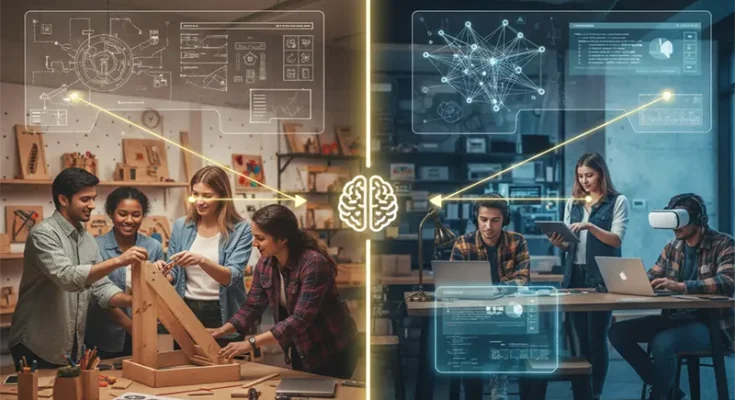
In 1896, John Dewey established the University of Chicago Laboratory School, a radical experiment premised on the belief that education should be a “miniature community” rather than a factory for rote memorization. Dewey’s vision of Progressive Education—learning by doing, social integration, and democratic participation—was a response to the rigidities of the Industrial Age. Today, in 2026, we face a similarly profound disruption. The “traditional” career path is being replaced by the gig economy, a landscape defined by project-based work, digital platforms, and the “precariat” workforce.

To thrive in this new era, we must reconstruct progressive education. We no longer need schools that produce compliant employees; we need “Learning Labs” that cultivate entrepreneurial agency and agile craftsmanship.

The “Gig” Skill Set vs. The “Factory” Curriculum

The industrial model of education was designed for stability: students learned a fixed set of facts to prepare for a lifelong job in a …

The Neo-Deweyan Shift: Reconstructing Progressive Education for the 21st-Century Gig Economy Read More
Beyond the Firewall: A Guide to HIPAA-Compliant Online Tutoring Platforms for Special Education

Beyond the Firewall: A Guide to HIPAA-Compliant Online Tutoring Platforms for Special Education

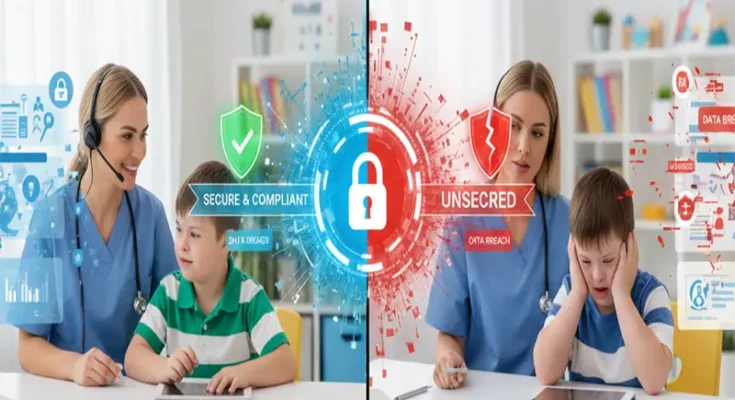
In the rapidly evolving landscape of remote learning, special education has emerged as a field requiring a unique blend of pedagogical innovation and stringent legal oversight. While general K-12 tutoring is primarily governed by the Family Educational Rights and Privacy Act (FERPA), the shift toward providing related services—such as speech-language pathology (SLP), occupational therapy (OT), and behavioral counseling—via the internet has brought a new regulatory giant into the classroom: the Health Insurance Portability and Accountability Act (HIPAA).

Navigating this “Compliance Crossroads” is not merely a bureaucratic hurdle; it is a foundational requirement for protecting the most sensitive data of our most vulnerable students. For providers in 2026, understanding the intersection of technology and healthcare law is essential to building a sustainable and ethical remote practice.

The Compliance Crossroads: FERPA vs. HIPAA

A common point of confusion for educators is determining which law applies. Generally, if a school employee provides a …

Beyond the Firewall: A Guide to HIPAA-Compliant Online Tutoring Platforms for Special Education Read More