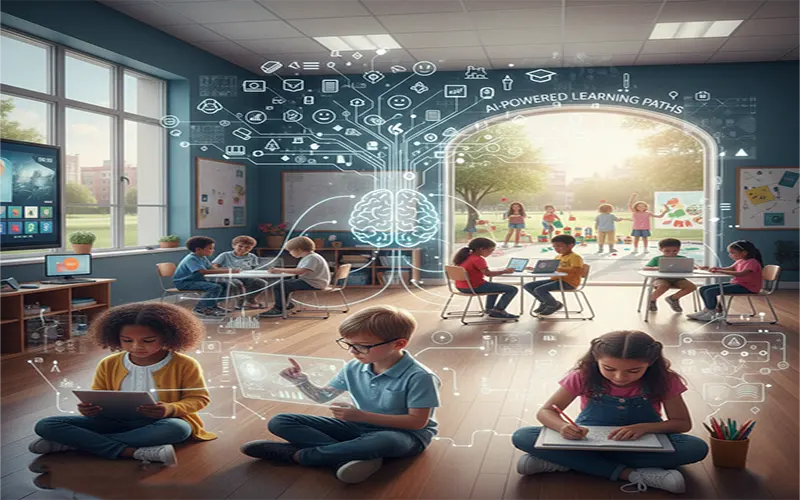
For decades, the “factory model” of education has been the standard: 30 students in a room, one textbook, one pace, and one primary instructor. While this model scaled education for the masses, it inherently left two groups behind—those who struggled to keep up and those who were ready to fly ahead. Today, we are witnessing a fundamental shift. AI-powered personalized learning paths are dismantling the one-size-fits-all approach, turning the classroom into a dynamic ecosystem where the curriculum adapts to the child, rather than the child conforming to the curriculum.
The Mechanics of Personalization: Under the Hood
To understand how AI transforms a student’s journey, we must look past the interface and into the “Triad Model” of intelligent tutoring systems. This architecture is what allows a platform to “know” a student better than a standard quiz ever could.
- The Student Model: This is the digital DNA of the learner. It goes beyond right and wrong answers, tracking engagement levels, time spent on specific tasks, preferred media types (video vs. text), and even the “forgetting curve” of previously mastered material.
- The Content Model: This is a vast, granular library of educational assets. Instead of a single “Chapter 4,” the AI sees thousands of “knowledge components”—individual concepts like “fractions with unlike denominators”—tagged by difficulty and instructional style.
- The Pedagogical Model: This is the engine’s brain. It uses machine learning to decide the optimal “next move.” If a student fails a geometry problem, the pedagogical model decides: Does this student need a different explanation, a foundational review of angles, or a 5-minute break?
Benefits for Students: The Power of Mastery
The primary advantage of AI-driven paths is the transition from time-based learning to mastery-based progression. In a traditional setting, a class moves to “Unit 2” because it is Tuesday, regardless of whether every student has grasped Unit 1. AI eliminates these “learning gaps.”
- Individualized Pacing: Students who grasp a concept instantly can skip redundant drills, preventing boredom and disengagement. Conversely, struggling students receive immediate scaffolding without the stigma of “falling behind” the rest of the class.
- Real-Time Feedback Loops: Learning is most effective when the feedback is instant. AI platforms provide “just-in-time” hints, correcting a student’s logic at the exact moment a mistake is made, which prevents the reinforcement of incorrect mental models.
- Increased Agency: When students see a map of their own progress and are given choices in how they consume content (e.g., choosing a science lesson themed around sports vs. space), they develop a sense of ownership over their education.
Case Study: The Intelligent Math Tutor
At a middle school in Illinois, a pilot program introduced an AI math platform. Instead of a standard homework set, the AI gave each student 10 problems tailored to their specific “frontier of knowledge.” Within one semester, students in the bottom quartile showed a 40% increase in proficiency, as the AI spent weeks reinforcing their foundational arithmetic before letting them attempt the grade-level algebra that had previously frustrated them.
Empowering the Educator: From Lecturer to Mentor
A common misconception is that AI-powered paths seek to replace the teacher. In reality, AI is the greatest labor-saving device a teacher can have. By automating the “data-crunching”—grading worksheets, identifying who is stuck, and generating progress reports—the AI frees the teacher to do what machines cannot: provide human mentorship.
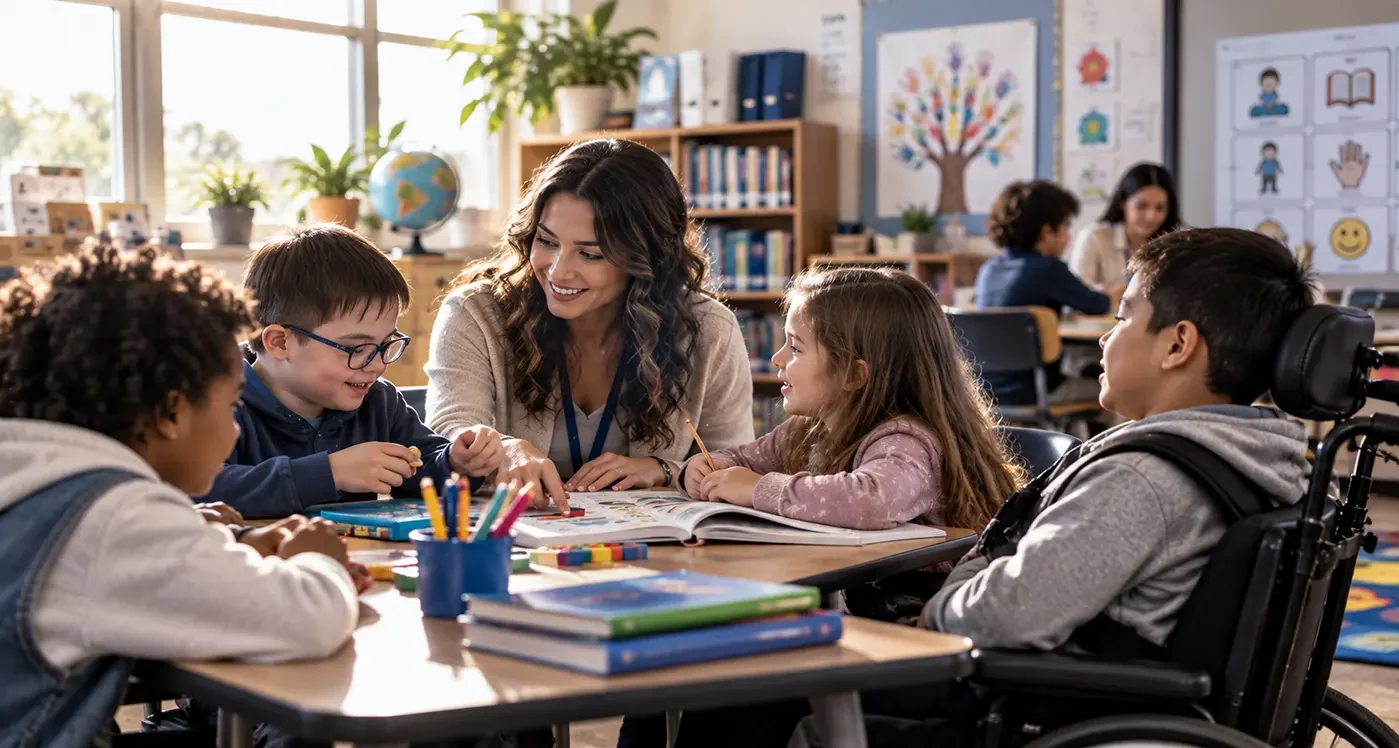
In an AI-integrated classroom, the teacher’s dashboard acts as a “heat map.” At a glance, the teacher can see that four students are struggling with the same concept. Instead of lecturing to 30 people (20 of whom may already understand the topic), the teacher can pull those four into a small-group intervention. The teacher shifts from a “sage on the stage” to a “guide on the side,” focusing on socio-emotional support, critical thinking, and collaborative projects that AI cannot facilitate.
Challenges and Ethical Considerations
While the potential is vast, the implementation of AI in K-12 education is not without significant hurdles.
- Data Privacy and Security: AI requires massive amounts of data to function. Protecting student information under frameworks like FERPA and GDPR is paramount. Schools must ensure that student data is never monetized and that “digital footprints” created in the 3rd grade do not unfairly follow a student into adulthood.
- Algorithmic Bias: If the data used to train these AI models contains historical biases, the AI may inadvertently recommend lower-rigor paths to students from marginalized backgrounds. Constant auditing of these algorithms is required to ensure equity.
- The Digital Divide: Personalized learning paths require high-speed internet and reliable devices. Without intentional investment, AI could widen the achievement gap, giving “high-tech” advantages to wealthy districts while leaving underfunded schools further behind.
The Future: A Symbiotic Classroom
As we look toward the next decade of K-12 education, the goal is not to turn schools into computer labs, but to create a symbiotic relationship between human empathy and algorithmic precision.
AI-powered personalized learning paths offer the first real opportunity to fulfill the promise of “No Child Left Behind”—not as a legal mandate, but as a technical reality. When we meet every student exactly where they are, we don’t just improve test scores; we foster a lifelong love of learning by proving to every child that they are capable of mastery. The future of education is not found in a textbook, but in a path uniquely carved for every individual.